A first week, kaja to kelod
Seven nights that follow the water down the island, from the cool northern lakes to the reef, with the days that make them worth the drive.

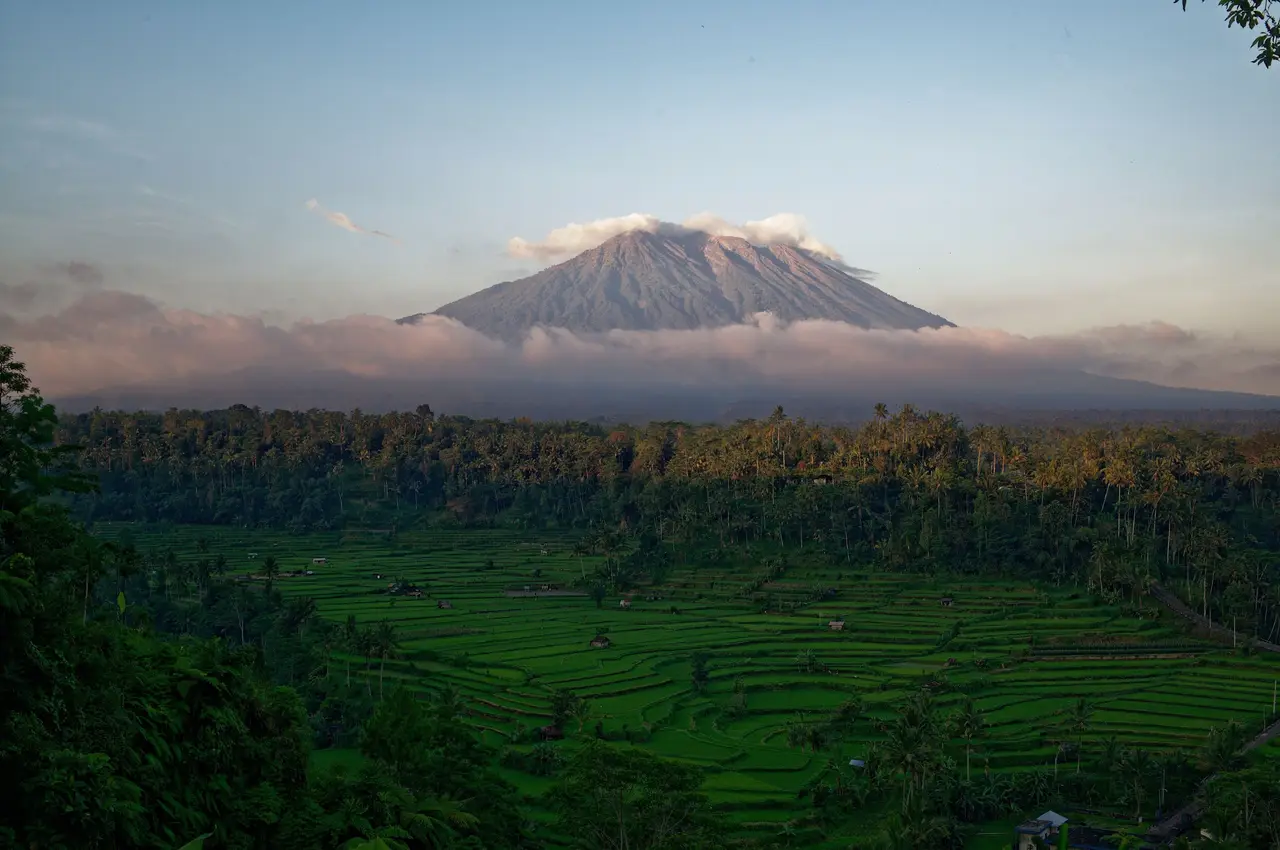
Balinese people orient themselves by the mountain and the sea. Kaja means toward the mountain, and wherever you are on the island that is toward the great volcano, Agung. Kelod means toward the sea. Villages, temples and rice fields are all laid out along that line, and so is this week: it starts in the cool highlands, follows the water through the terraces and the forest, and ends at the reef.
It suits a first visit of seven nights, and it is a plan to bend, not a timetable. We have written it the way we would run it, and added the days you can add. Where we say a stop is "a morning", we mean the roads: Bali is slower than its map, and we plan every transfer as most of a morning.
The week
Nights 1 and 2
Munduk
The coolest place on the itinerary, and a gentle place to settle after the flight. A forest walk or a lake in the morning, a waterfall path in the afternoon, and the temple on Lake Beratan before the coaches arrive. Two nights, so that day two is yours.
Day 3, morning
Jatiluwih, on the way down
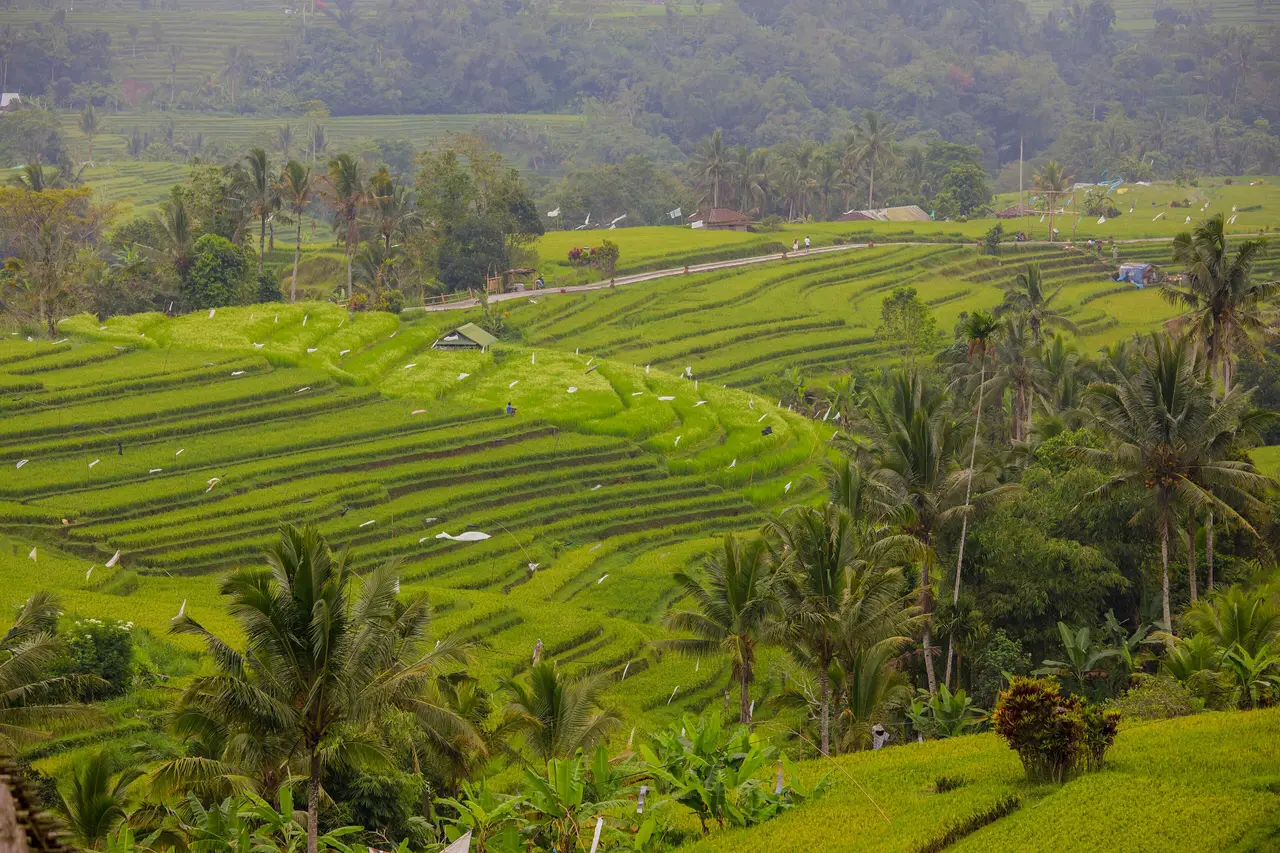
Leave early and give the terraces a morning: a walk with a farmer who can tell you who opens which gate, and Pura Luhur Batukaru in its dark forest just beside them. Then on to Ubud for the afternoon.
Nights 3 to 5
Ubud
Three nights, with the craft day and an evening of Legong at the palace, a cooking class from the market, and the Campuhan ridge at first light. If you want one early start, make it the Batur sunrise, from here.
Days 6 to 7, nights 6 and 7
Uluwatu, and the sea
Down to the south coast on day 6, for the cliffs and the Kecak at 18:00. Day 7 is yours: a beach, a surf lesson, or the long lunch.
Day 8
Fly home, or add a night
A morning flight home works from here. With one more night, move to Sanur for sunrise on the sand and a boat day to Nusa Penida for the reef mantas.

If you have more time
- Add two nights in Sidemen between Ubud and the coast, for the valley under Agung and the weaving. It slows the week down in the right way.
- Add three nights in Amed at the end, for the reef and the Tulamben wreck, and fly out of Denpasar from there.
- Add the islands. Across the water lays out the Gilis, Komodo and East Java, with how long each takes and which months suit them.
- Reverse it if you want to end in the hills: start at Sanur and finish in Munduk, with the quiet at the end.
What changes by season
In the dry months, roughly April to October, every part of this week works, and the highlands are at their clearest. Between about December and March it rains most afternoons: keep the mornings for the terraces and the lakes, and take the cooking class and the temples in the wet. The calendar has the months one by one, and the days to avoid.

Tell us your dates and we will turn this into a plan with names, drivers and boats: plan your trip. We reply within one working day.
Where this comes from
Each fact below was checked on the web on the day shown. Where one source stands alone, we say so. This site and the company behind it are a sample: the facts are real, the byline is not a person.
- Kaja and kelod
- Kaja means toward the mountain and kelod toward the sea; Agung is taken as kaja wherever you are, so the direction changes with your position on the islandChecked 7 Oct 2026. Source: Ceremony Bali, Kaja and Kelod; Baligram; Bali Aga architecture (Wikipedia), agreeing
- Kecak at Uluwatu
- 18:00 daily, about an hourChecked 7 Oct 2026. Source: Wikipedia, Uluwatu Temple; Bali Holiday Secrets (see the Uluwatu guide)
- Legong at Ubud Palace
- Nightly at 19:30, about 90 minutes, with a different programme on different nightsChecked 7 Oct 2026. Source: Bali Holiday Secrets; Viator and GetYourGuide listings
- Everything else
- The places, heights, times and seasons are each sourced on the guide for that area and on the Across the water and When to go pagesChecked 7 Oct 2026. Source: LuxeTide guides
Keep reading
Practical guide · 5 min read
Bali: what to know before you go
The things that change, checked on 7 October 2026: the visa, the arrival card, the levy, the rules for visitors, and what to leave at home.
Culture · 3 min read
How the water is shared
The terraces that fill the postcards are the visible half of a system of canals, weirs, temples and meetings. This is how it works, and why UNESCO listed it.

