Temple etiquette: how to be a good guest
Bali's temples are working places of worship, not museums. Here is what to wear, where to stand, what not to step on and what to do when a ceremony begins.

A temple in Bali is where a village, a family or a profession keeps its relationship with the gods and its ancestors, and most of them are in use most days. You are welcome in the parts that are open to visitors, and the way you behave there is what decides whether you are a good guest. None of it is hard.
What to wear
You need two things, and the temple will lend you both. The sarong (kamen) is wrapped over whatever you are wearing and covers the legs to at least mid-calf. The sash (selendang) is tied at the waist over the sarong. It is not decoration: it marks a line across the body, separating the upper part, which is understood as spiritual, from the lower, which is understood as physical. Both are expected of everyone, men, women and children who can walk, and shoulders should be covered as well.
Most large temples rent sarongs and sashes at the gate for a small fee. Carrying your own from a local market is quicker and kinder to your knees in a queue. The governor's circular of 2025 also asks visitors to avoid swimwear, crop tops and anything sheer or very tight when visiting sacred places.
Where you may go
A Balinese temple is a series of courtyards, rising in holiness from the entrance to the inner sanctum. Since 2025 the governor's circular has said that visitors may not enter the inner and middle courtyards unless they are there to worship, in traditional dress. In practice many well-known temples mark a visitor route and a place to stand: follow the signs, follow your guide, and treat a sign that says Dilarang Masuk as meaning exactly that.
The circular, and the custom behind it, also ask women who are menstruating not to enter the sacred areas. The idea is a temporary ritual impurity (cuntaka) that also covers open wounds, a recent birth or a period of mourning, for anyone of any gender. It rests on trust: nobody will check, and the outer parts of a temple remain open. At Tirta Empul, where visitors can join the purification, we mention it to everyone at the start of the day.
The small things that matter
- Offerings. The small palm-leaf trays of flowers and rice (canang sari) on the ground, at doorways and on shrines are deliberate and renewed daily. Step around them, never over them.
- Heads and feet. Do not put your head higher than a priest's, particularly in a ceremony. Do not point your feet at a shrine or a priest: sit cross-legged or kneel. Do not touch anyone's head, including a child's.
- Climbing. Do not climb on shrines, walls, sacred trees or statues, for a photograph or otherwise.
- Quiet. Phones on silent, voices low, no music, no drones.
- Photographs. Generally fine in the outer courtyard and not during prayer. No flash. Ask before photographing a person, and do not stage a pose at a shrine.

If a ceremony begins while you are there
Temples fill up for anniversaries, full moons and festivals, and you may arrive to find a procession, a gamelan and a courtyard full of families in white and gold. Do not leave unless you are asked to. Move to the edge, sit or stand quietly, put the camera away and watch. Visitors who are dressed properly and behave quietly are usually left in peace, and often smiled at.
Afterwards
Thank the people who lent you a sarong, leave the courtyard as you found it, and take your rubbish with you. If there is a donation box at the gate, a small gift is always welcome.
Where this comes from
Each fact below was checked on the web on the day shown. Where one source stands alone, we say so. This site and the company behind it are a sample: the facts are real, the byline is not a person.
- Sarong and sash
- A sarong covering the legs to at least mid-calf, wrapped over your clothes, and a sash tied at the waist, which marks the line between the spiritual and the physical parts of the body. Both for everyone, with shoulders covered. Most major temples rent them at the entrance.Checked 7 Oct 2026. Source: All About City, Bali temple etiquette
- Courtyards and menstruation
- The governor's circular says foreign visitors may not enter the inner and middle temple areas (Utamaning and Madyaning Mandala) unless they are worshipping in traditional dress, and menstruating women are prohibited from the sacred zonesChecked 7 Oct 2026. Source: Bali Discovery, reporting Circular Letter No. 7 of 2025; Love Bali (official)
- Cuntaka
- Temporary ritual impurity: menstruation, open wounds, a recent birth or a period of mourning; trust-based, with the outer areas openChecked 7 Oct 2026. Source: All About City (one source for this wording)
- Offerings, heads and feet
- Do not step on offerings; never put your head higher than a priest's; do not point your feet at a shrine or priest; do not touch anyone's headChecked 7 Oct 2026. Source: All About City, Bali temple etiquette
- During a ceremony
- You may stay: move to the edge, sit or stand quietly, put the camera away; leave only if asked. Photography is generally fine in outer courtyards, not during prayer, with no flash.Checked 7 Oct 2026. Source: All About City, Bali temple etiquette
- Other prohibitions in the circular
- No climbing sacred trees or monuments, no inappropriate or nude photographs at sacred places, no littering in lakes, rivers or the seaChecked 7 Oct 2026. Source: Love Bali (official)
Keep reading

Practical guide · 5 min read
Bali: what to know before you go
The things that change, checked on 7 October 2026: the visa, the arrival card, the levy, the rules for visitors, and what to leave at home.
Culture · 3 min read
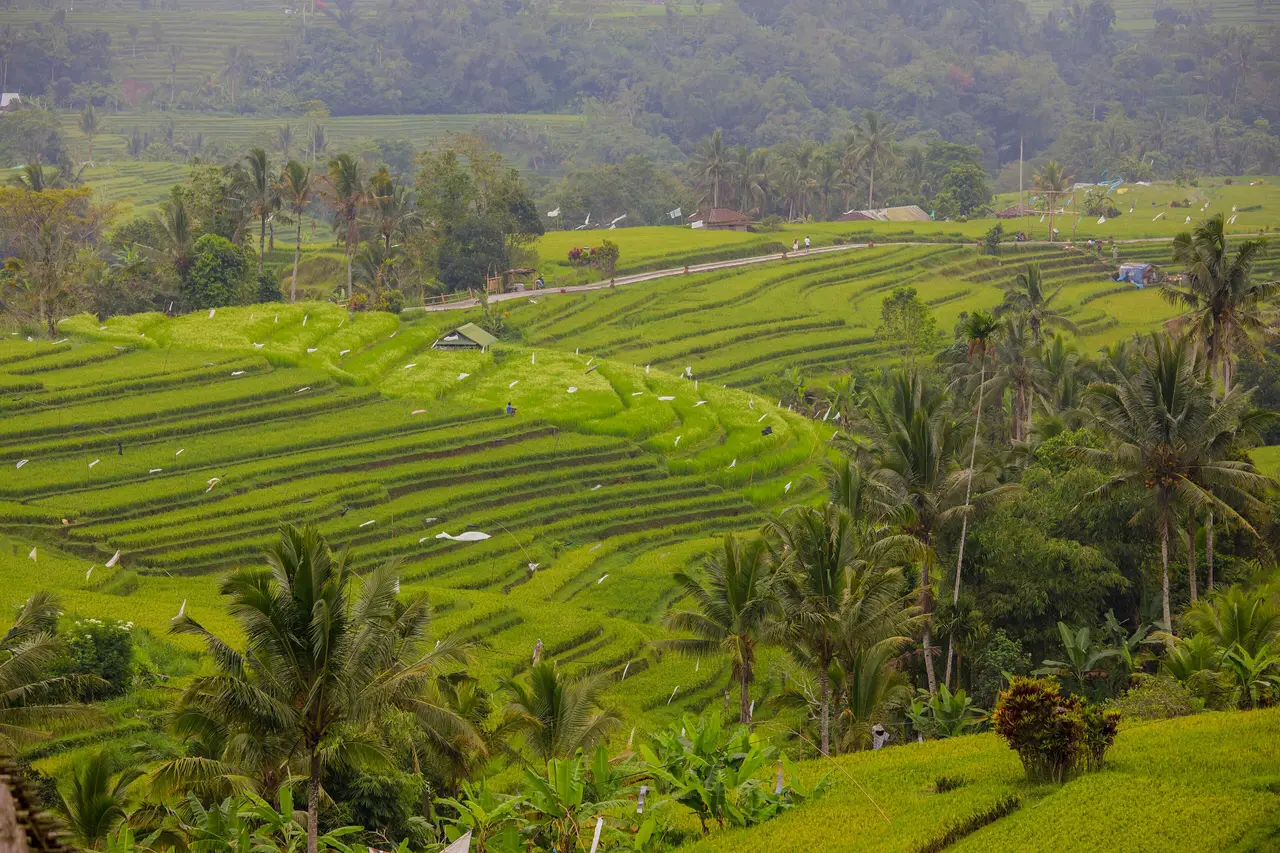
How the water is shared
The terraces that fill the postcards are the visible half of a system of canals, weirs, temples and meetings. This is how it works, and why UNESCO listed it.

